
ROV Inspection & Robotic Cleaning for Critical Water Infrastructure
Specialist remote inspection and cleaning for drinking water, wastewater, fire water and industrial water assets across New Zealand.
Using ROV and robotic crawler technology, Valmar Tank Solutions helps asset owners understand internal asset condition, assess sediment or sludge accumulation and carry out targeted cleaning while reducing reliance on personnel entry, drain-downs and other high-disruption methods where site conditions permit.
- Inspect before cleaning
- Potable-water hygiene controls
- Video, photographs and records
See What's Beneath the Surface
Tanks, reservoirs and wastewater assets can look serviceable from the outside while sediment, sludge, debris or hidden defects develop below the waterline. Our approach starts with inspection so the cleaning method is based on actual conditions rather than assumptions.
From potable reservoirs to wastewater ponds and fire water storage, we combine remote access technology with practical water-infrastructure experience to inspect, assess, clean and document critical assets.
- Remote inspection of tanks, reservoirs, ponds and submerged water infrastructure.
- Robotic sediment and sludge removal using purpose-selected equipment where conditions are suitable.
- Potable-water work delivered with hygiene, disinfection and contamination-risk controls appropriate to the asset.
- Visual evidence, cleaning records and practical findings that support maintenance and asset-management decisions.

A strainer box on the floor of a steel water tank, with sediment settled around it. From the hatch this tank looked fine.
Inspection and Robotic Cleaning Services
Remote inspection and cleaning for drinking water, wastewater, fire water and industrial water assets across New Zealand. Every job starts with an inspection, so the method is chosen from what is actually inside the asset.

Drinking Water - VAC Boss
Potable-water ROV inspection and robotic sediment removal, with asset-specific hygiene, disinfection and water-quality controls. Read more
Wastewater - Sludge Boss
Remote inspection and sludge removal for wastewater tanks, ponds, lagoons, wet wells and treatment assets. Read more
Fire Water Tanks
Condition inspection, sediment assessment and cleaning options that support fire-water system maintenance and asset records. Read more
ROV Inspection & Condition Assessment
High-definition video, photographic records and observations of submerged components, sediment and visible defects. Read more
Industrial Water Infrastructure
Remote inspection and cleaning for process water, raw water, settling tanks and difficult-to-access submerged assets. Read moreInspect First. Then Decide.
- Inspect before cleaning - establish actual conditions first.
- Reduce personnel exposure - remote systems can reduce the need for confined or submerged entry.
- Reduce unnecessary disruption - work can often be planned without automatically defaulting to a full drain-down.
- Evidence-based reporting - capture before, during and after visual records.
- Asset-specific methodology - access, outlets, water quality, sediment, sludge and operating conditions are assessed before work proceeds.
- One practical team - inspection, robotic cleaning, conventional cleaning and supporting maintenance can be combined where required.

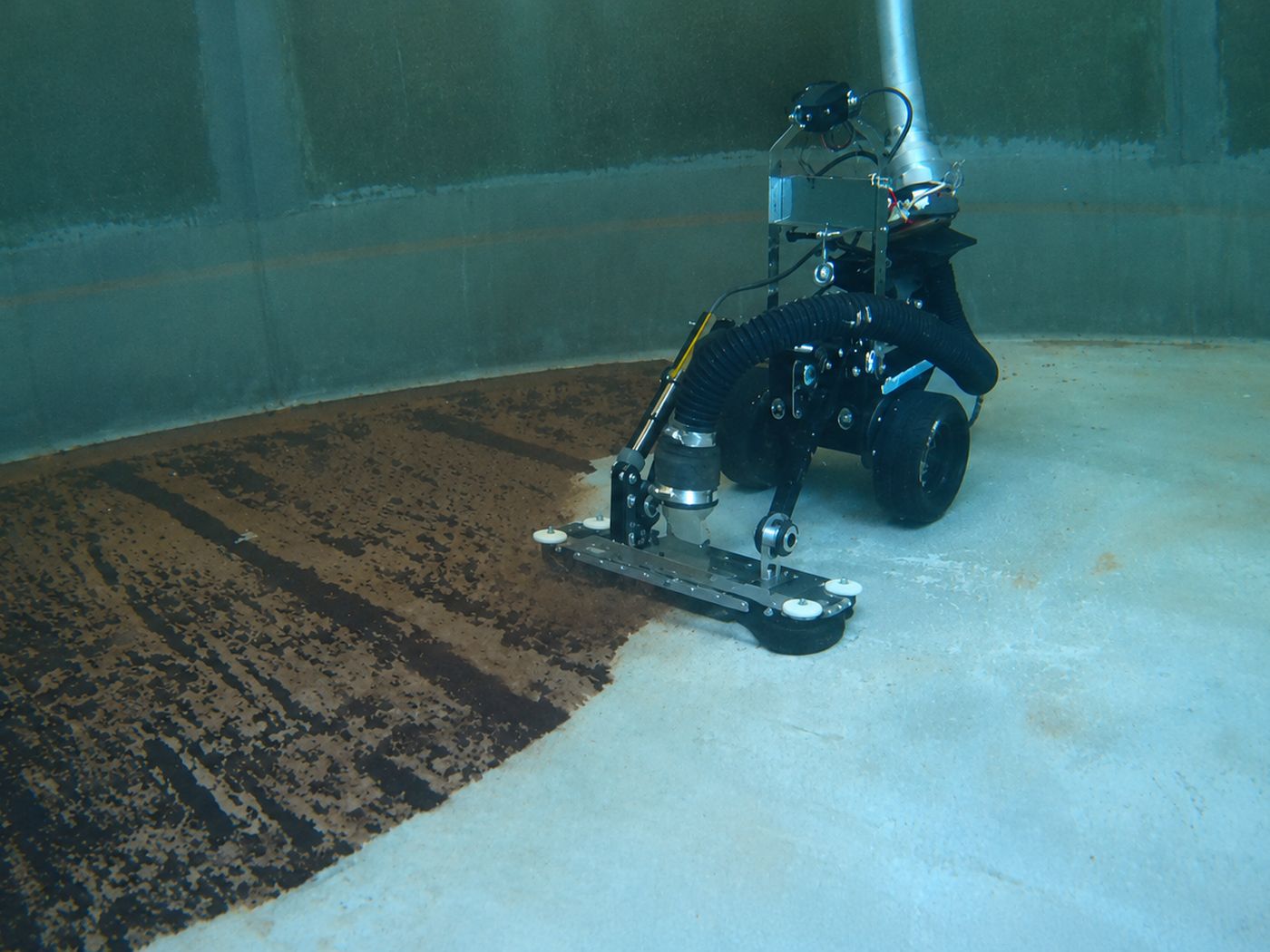
The VAC Boss crawler on a reservoir floor, with the operator watching the live camera feed from above the water.
Two Robotic Systems. One Method.
Valmar selects the technology to suit the asset and the job rather than forcing every project into one method.

VAC Boss - Potable Water Cleaning
Our potable-water robotic cleaning system is used for suitable tanks and reservoirs where controlled sediment removal can be undertaken without unnecessary personnel entry. Equipment suitability, hygiene controls, disinfection, turbidity management and operating conditions are confirmed for each asset.

Sludge Boss - Wastewater Cleaning
Our wastewater robotic cleaning system is configured for sludge and sediment removal in challenging submerged wastewater environments. Inspection is used to establish sludge depth, distribution, access and the most appropriate removal and disposal method before cleaning begins.
Services scoped around applicable New Zealand requirements
Valmar can structure inspection and cleaning scopes to support drinking-water supplier obligations, fire-system maintenance requirements, site compliance schedules, asset-owner procedures and manufacturer maintenance requirements. See Standards & Compliance for the detailed framework and scope limitations.
Inspect. Assess. Clean. Report.
The same six steps on every asset, whether the outcome is a remote clean, a conventional drain-down or simply a clear picture of what is inside.
-
Assess
Understand the asset, operating constraints and required outcome.
-
Inspect
Establish actual submerged condition, sediment or sludge accumulation and access constraints.
-
Plan
Select the appropriate remote, conventional or hybrid methodology.
-
Clean
Remove sediment or sludge in a controlled manner where cleaning is required.
-
Verify
Capture visual evidence of the completed work.
-
Report
Provide findings, records and practical maintenance recommendations.
What the ROV Sees
Inspection frames and site photographs from our own work - sediment, outlets, ladders, strainers and floors, as the camera found them. No stock photography anywhere on this site.
Common Questions
Can you inspect a drinking water reservoir without draining it?
In suitable circumstances, yes. The method depends on the reservoir configuration, water-quality requirements, supplier procedures, access and operating conditions.
Can you clean a drinking water reservoir while it remains full?
Potentially. VAC Boss can provide a remote cleaning option for suitable assets, but the decision is site-specific and depends on water quality, hydraulics, outlets, sediment conditions and agreed operational controls.
Do you provide video and reports?
Yes. Depending on scope and visibility, deliverables can include inspection video, photographs, before-and-after footage, observations, cleaning records and practical maintenance recommendations.
Do you only use ROV methods?
No. We can recommend remote inspection, robotic cleaning, conventional drain-down cleaning or a hybrid approach depending on the asset and required outcome.
What is the best first step?
Start with an inspection. It gives both parties a clearer picture of the asset, sediment or sludge conditions and the most practical maintenance method.
Need to know what is happening inside your tank or reservoir?
Start with an inspection. We can help establish the condition of the asset and recommend a practical next step based on what is actually found. Tell us what the asset is, roughly where it is and what you need to know, and we will come back to you.
027 313 0280- marcus@valmar.co.nz
- Based in Tauranga, Bay of Plenty - working across New Zealand
- Drinking water, wastewater, fire water and industrial water assets
Helpful to have on hand: the asset type and approximate size, depth, access arrangement, floor or liner type, and whether it can stay in service. If you do not know yet, that is fine - the inspection is how we find out.